
Backtesting and More
We delve into what work needs to be done before a strategy is ready for primetime.
OriginH
1/29/20242 min read
Introduction
In the intricate world of systematic trading, the journey from conceptualization to execution is fraught with nuance and challenges. The initial steps of hypothesizing and gathering data are foundational, but it's in the rigorous testing and continuous refinement where strategies are truly forged. This blog post delves into the crucial steps of testing a systematic trading strategy.
Backtesting
Backtesting is the foundation upon which systematic trading strategies are validated. This process involves simulating the strategy against historical data to gauge its potential efficacy. Key considerations during this phase include
Avoiding look-ahead bias to ensure the strategy's decisions are based solely on information available at the moment of the trade.
Mitigating overfitting by resisting the temptation to tailor the strategy too closely to historical data, which may not be indicative of future conditions.
Incorporating realistic transaction costs, including slippage and market impact, to mirror actual trading conditions as closely as possible.
Reserving a portion of your historical data to test your strategy on.
Performance Assessment
Performance assessment transcends mere profit and loss calculations. It involves a nuanced analysis using metrics like the Sharpe ratio, Sortino ratio, maximum drawdown, and Calmar ratio. This phase demands an understanding of the strategy's behavior across diverse market conditions, offering a multi-dimensional view of its potential risks and rewards.
Fortifying Your Strategy
Robustness checks are your bulwark against the capricious nature of markets. This phase involves:
Out-of-Sample Testing: Validating the strategy on fresh data to gauge its adaptability and predictiveness.
Stress Testing: Simulating extreme market scenarios to understand how the strategy might perform under duress.
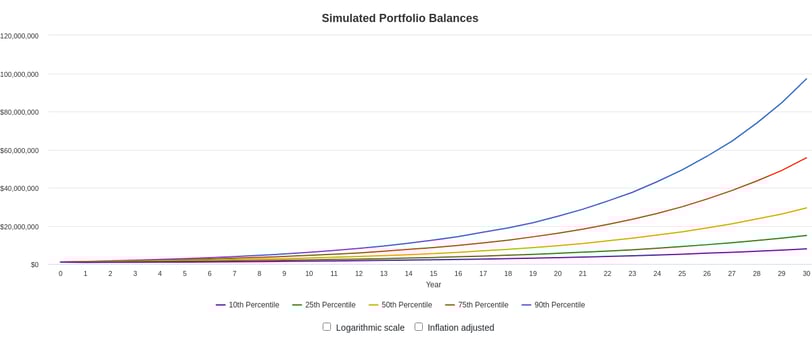
Monte Carlo Simulations: Employing probabilistic models to anticipate a spectrum of outcomes, offering insights into the strategy's stability and potential pain points.
Optimization
Optimization is a double-edged sword. While it aims to refine your strategy, there's a risk of overfitting. The focus should be on enhancing the strategy's resilience and effectiveness, not just its historical performance.
Forward Testing
Forward testing, or paper trading, is the strategy's dress rehearsal before the live performance. It's an opportunity to observe the strategy in real-time market conditions without the financial risk, offering a final litmus test for its readiness.
Continuous Monitoring and Adjustment
A trading strategy is a dynamic entity, evolving with the markets. Continuous monitoring is pivotal, with an emphasis on being agile and receptive to adjusting or halting the strategy in response to significant market shifts or internal performance issues.
Conclusion
The path from a strategy's inception to its live execution is full of pitfalls and nuance. Testing a systematic trading strategy is the fabric of a robust, resilient, and adaptable trading methodology. By navigating these steps with honesty, diligence, precision, and an unwavering commitment to continuous learning, we can ensure that our trading approach is not only tailored to current market conditions but is also agile enough to adapt to future changes. This journey is not just about creating a profitable strategy; it's about cultivating a comprehensive framework that stands the test of time, evolving with the markets, and consistently aligning with our investment philosophy and risk tolerance. In this ever-changing financial landscape, our commitment to rigorous testing and ongoing refinement is the north star that guides us towards sustained success and continuous growth.